
In many production environments, sound is treated as something that can be fixed later. While modern software can repair minor flaws, poor audio capture remains one of the most limiting factors in post-production. Editors can work around visual problems far more easily than distorted, inconsistent, or poorly recorded sound.
Unlike images, audio does not tolerate aggressive correction. Once dialogue is clipped, masked by noise, or recorded at the wrong distance, the editor’s options narrow quickly. What begins as a small mistake on set often becomes the defining weakness of the final programme.
Why This Matters
Viewers will tolerate imperfect pictures, but poor audio immediately breaks trust, clarity, and engagement.
Audio problems follow every cut
Editors can replace pictures using cutaways, alternative angles, or tighter edits, but audio runs continuously beneath the image. Any distortion, noise, or imbalance therefore repeats at every cut point, making audio faults cumulative rather than isolated.
Dialogue, ambience, and effects form the structural backbone of most edits. When these elements are compromised, the editor cannot simply remove them without damaging intelligibility, pacing, or narrative continuity, which makes audio faults far more restrictive than visual ones.
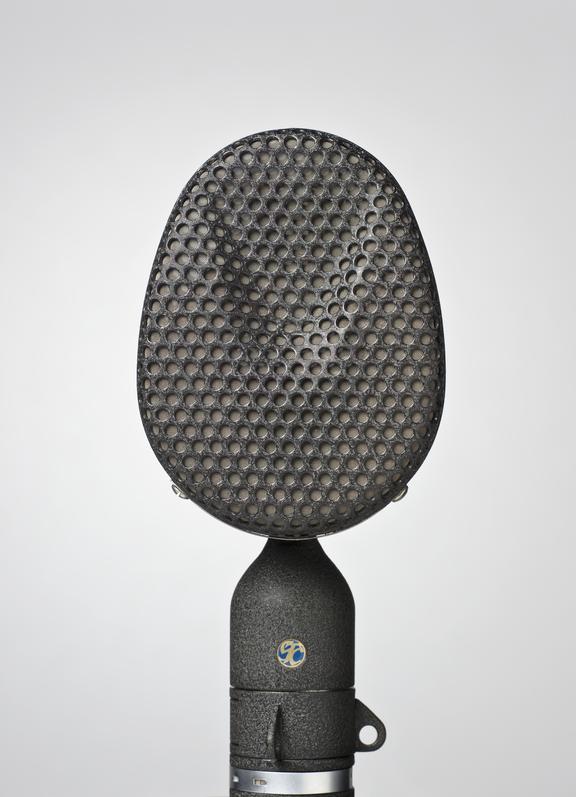
Microphone choice and placement define usable sound far more than any software tool. Editors consistently prefer clean, close dialogue with stable tone over distant recordings filled with room reflections and noise. Correct placement gives the edit a reliable foundation.
Once audio problems are present, editors are forced into corrective workflows involving noise reduction, spectral repair, and level automation. These processes are time-consuming and often reduce clarity while introducing audible artefacts.
Even when technically repaired, compromised audio frequently sounds thin, processed, or fatiguing. Audiences may not recognise the cause, but they instinctively perceive the discomfort.
Distortion and noise cannot be undone
Audio distortion caused by clipping permanently alters the waveform, flattening peaks and generating harmonic distortion that cannot be reconstructed. Unlike clipped highlights in video, clipped audio contains no recoverable detail.
Background noise presents a similar limitation. Noise reduction algorithms work by subtracting frequency content, but this inevitably removes parts of the desired signal, reducing intelligibility and natural tone.
The more aggressively audio is repaired, the narrower its dynamic range becomes. Voices lose presence, transients soften, and spatial detail collapses, leaving editors with technically clean but lifeless sound.
Monitoring failures create invisible problems
Many audio problems originate on set because operators rely on meters rather than critical listening. Meters indicate level but cannot reveal distortion, clothing noise, RF interference, or phase issues.
Headphone monitoring allows faults to be detected immediately while corrective action is still possible, whether through repositioning microphones, adjusting gain structure, or controlling the environment.
Without proper monitoring, problems remain embedded in every take, multiplying their impact once editing begins.
Editors consistently report that unmonitored audio creates the most frustrating post-production scenarios, because the faults were avoidable at the point of capture.
Consistency matters more than perfection
Editors can work efficiently with audio that is not technically perfect, provided it is consistent. Stable tone, perspective, and level allow dialogue to cut smoothly across shots and scenes.
Inconsistent microphone distance, fluctuating gain, and changing acoustic environments produce audible jumps that disrupt continuity and draw attention to the edit.
Correcting these inconsistencies requires extensive automation, equalisation, and dynamic processing, significantly slowing the editing process.
When audio remains consistent, post-production becomes a creative exercise rather than a technical recovery operation.
Audio capture is a production decision
Good audio is the result of deliberate production decisions rather than equipment cost. A modest microphone used correctly will outperform a premium microphone used without discipline.
Microphone position, angle, and distance determine clarity, proximity effect, and tonal balance far more than brand or price point.
Treating audio capture as a core production discipline aligns sound with camera operation and editing from the outset.
Sound, picture, and editing are one workflow
Sound operators, camera operators, and editors all contribute to the same storytelling process. When audio is captured with editorial requirements in mind, the entire workflow becomes faster and more coherent.
Editors work best when technical repair does not dominate the process. Clean audio preserves dynamic range, intelligibility, and emotional nuance.
Understanding how audio choices affect post-production is a defining characteristic of professional production practice.
Training audio with the edit in mind
This philosophy underpins the training programme being developed for 2025, which treats sound, camera operation, and post-production as interconnected disciplines rather than isolated tasks.
By aligning audio capture with editorial needs, productions become quicker to edit, more consistent in quality, and more valuable for broadcast, archive, and resale.
Join the 2025 Training Programme
If you’d like early access, course details, and a discounted pre-registration rate before 31 December 2025, click below: